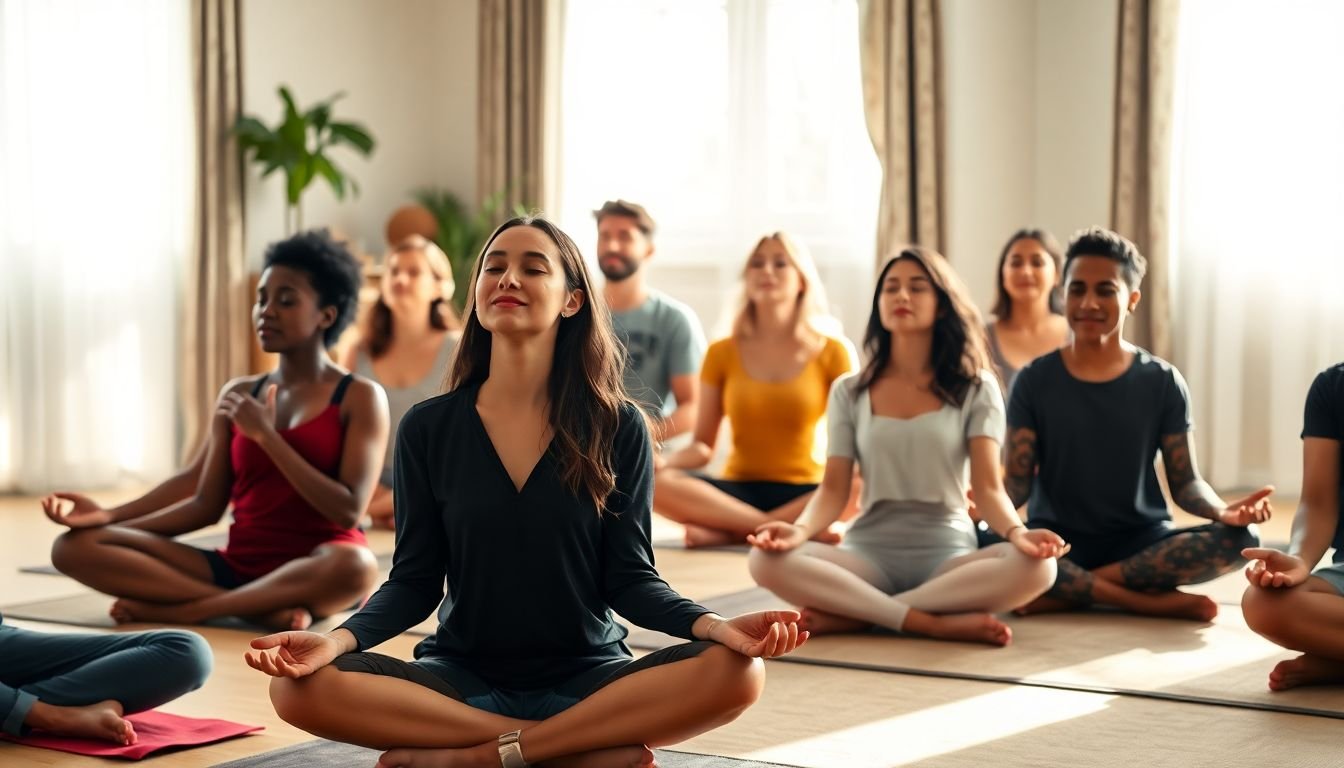
Have you ever walked into a room full of people quietly meditating together and wondered, “What’s really happening there?” In my clinical experience, the question I often hear is whether meditating in a group offers more than just solitude and calm. It turns out, the answer is quite nuanced—and fascinating.
Why Group Meditation Feels Different
When I first started recommending meditation to patients, many preferred to do it alone. But I noticed something powerful when I joined small meditation circles: a palpable energy, a collective rhythm that seemed to deepen the calm. How can simply meditating with others change the experience?
Science suggests that group meditation not only fosters individual relaxation but also strengthens social bonds, which are essential for our mental well-being. This social connection can amplify the positive effects—think of it as tuning several instruments together to create richer music.
The Science Behind Shared Mindfulness
Neurologically, meditation promotes increased activity in areas of the brain tied to emotional regulation, attention, and self-awareness. In group settings, studies show enhanced synchronization of brain waves among participants, which may support deeper empathy and a sense of unity.
But here’s the interesting part: beyond brainwaves, the act of sharing silence creates a subtle but powerful feedback loop. When your attention is aligned with others, it can deepen your own mindfulness practice, making it easier to stay present.
Real-Life Effects: More Than Just Feeling Good
One teenager I worked with struggled with anxiety and often felt isolated. After joining a group meditation workshop, she described feeling “part of something bigger,” which eased her loneliness and improved her sleep. This example highlights how meditative groups may build not only individual calm but also community resilience.
Yet, it’s not magic. The benefits depend on factors like group size, facilitator quality, and personal openness. Not everyone thrives equally, which is why the question “Is group meditation for me?” deserves honest reflection.
Beyond the Mind: Physical Health Perks
There’s growing evidence that meditating in groups can lower stress hormones like cortisol more effectively than solo meditation. Lower stress means reduced inflammation and potentially better cardiovascular health, a crucial point for people managing chronic conditions.
Also, the consistency often encouraged by group schedules helps maintain a regular meditation habit. Imagine a weekly appointment not just with yourself, but with a supportive community.
So, Should You Try It?
Why not? Group meditation offers a unique blend of personal introspection and social connection—a rare combo in today’s fast-paced world. If you’ve been hesitant, think of it like a shared journey with invisible threads linking you to others in pursuit of calm and clarity.
However, if you feel self-conscious or distracted in groups, starting alone might be better before venturing into collective practices.
Final Thoughts
Meditation is not a one-size-fits-all solution. But adding the group element could amplify its transformative effects in ways we’re only beginning to understand. More research is certainly needed, but the evidence so far makes a compelling case for giving it a try.
In the end, it’s about connection—both inward and outward. And in a world craving meaning and belonging, group meditation invites us to connect deeply, breathe together, and transform alongside one another.
References Científicas
- Basso JC, McHale A, Ende V, Oberlin DJ, Suzuki WA. Brief meditation increases compassionate responses toward others. Emotion. 2019;19(8):1484-1491. doi:10.1037/emo0000589
- Tomasino B, Fabbro F. Mindfulness meditation and the brain correlates of present moment awareness: EEG and neuroimaging findings. J Altern Complement Med. 2016;22(2):97-107. doi:10.1089/acm.2015.0043
- Rodrigues MF, Lacerda SS, Naves MD, et al. Effects of group mindfulness-based interventions on mental health indicators: a systematic review and meta-analysis. Psic Teor Pesq. 2018;34:e34434. doi:10.1590/0102.3772e34434
- de Barros, VB et al. Influence of meditation group practice as regulator of salivary cortisol levels and blood pressure in hypertensive patients: a randomized controlled trial. Rev Bras Med Esporte. 2017;23(2):133-136. doi:10.1590/1517-869220172302164135